.jpg?w=4000&h=2666)
There is a specific, primal scent that fills the air after a heavy rain in the desert—the smell of thirsty earth finally drinking. In the quiet reaches of the Kuxiang River, this scent is the beginning of everything. Here, the soil isn’t just dirt; it is a memory of the mountains, carried down by glacial meltwater and deposited over millennia. While the world outside rushes toward the synthetic and the soulless, a handful of artisans remain by the riverbanks, waiting for the mud to speak. To hold a piece of our pottery is to hold a fragment of this landscape, shaped not by a machine, but by the slow, rhythmic pulse of a human heart.
The Material: Mud Born of Water
Not all clay is created equal. The soul of our pottery lies in the sediment of the Kuxiang River. This earth is remarkably fine, yet possessed of a stubborn character that requires months of preparation. The process begins with patience. The mud must be dried, crushed, and filtered through silk-like sieves until it is as soft as flour. Only then is it reunited with water, kneaded by hand until it achieves a texture that feels almost like skin. This isn't just "material"—it is a living substance that breathes. It remembers the touch of the potter, and it carries the cool, ancient energy of the river into your home.
The Craft: The Silent Conversation
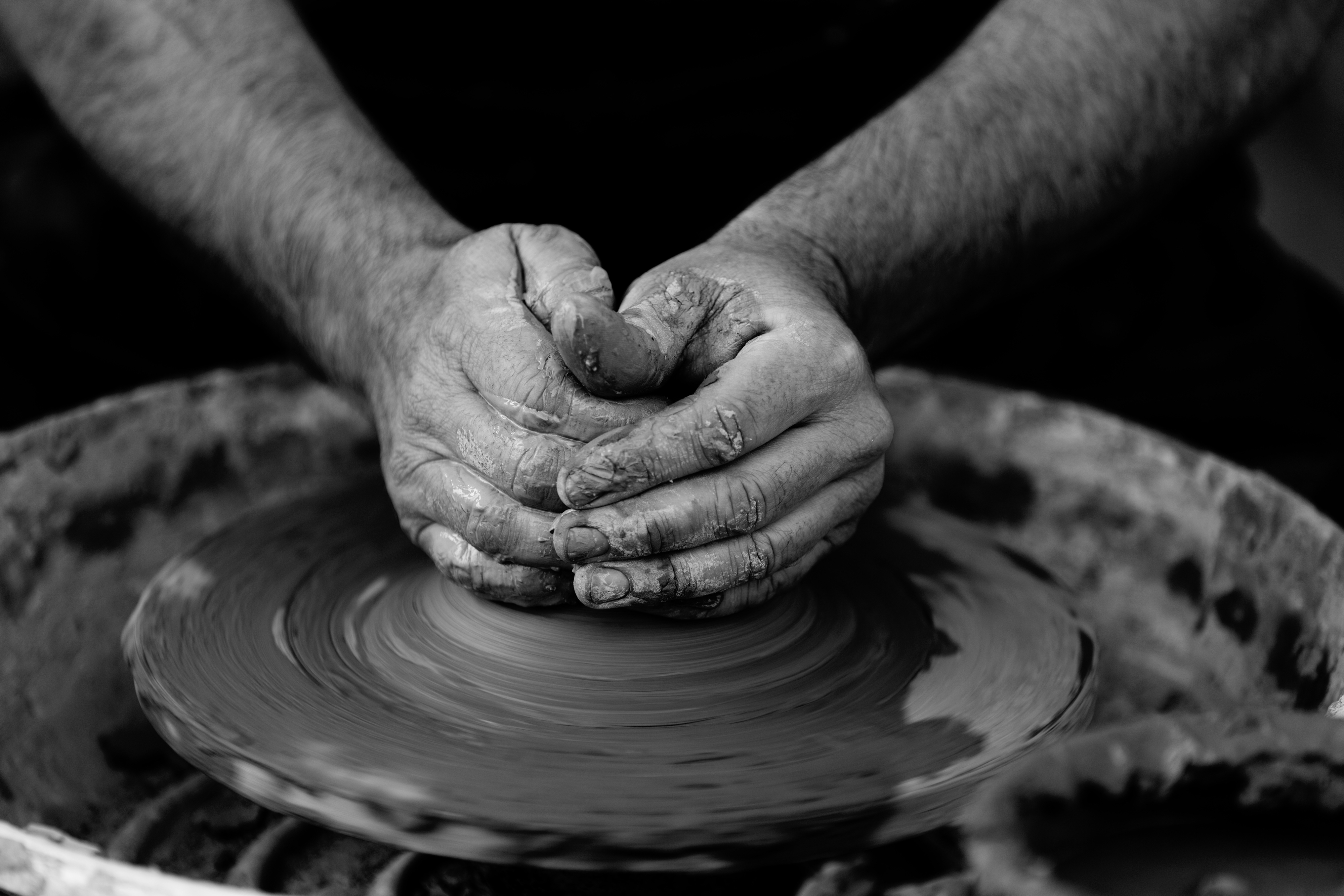
In the workshop, the only sound is the low, hypnotic whir of the potter’s wheel. This is where the "silent conversation" happens. The artisan doesn't force the clay; he coaxes it. With hands calloused by decades of labor, he finds the center of the spinning mass, his fingers moving with a grace that looks effortless but took a lifetime to master.
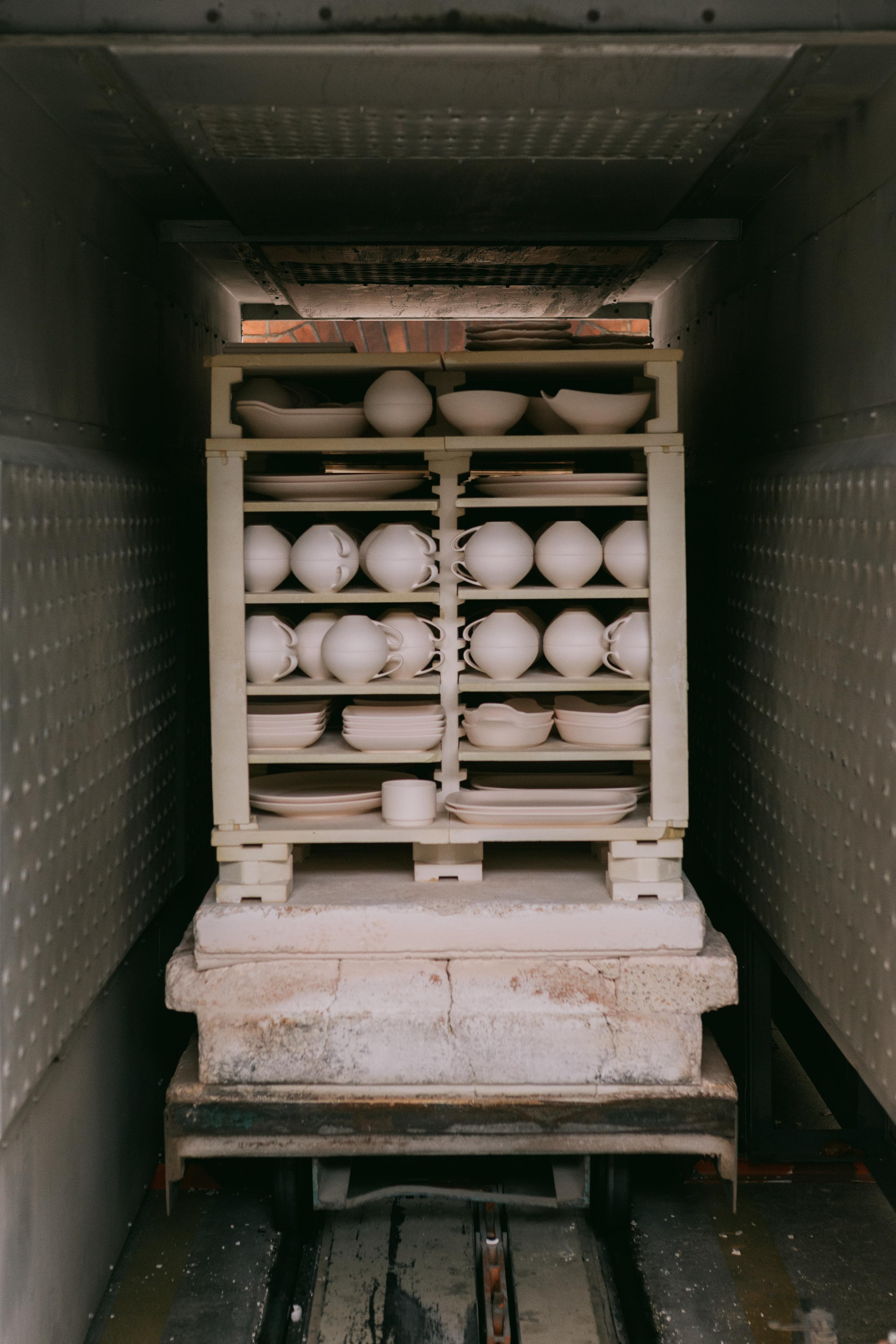
Unlike industrial ceramics, our vessels are never rushed. After the initial shaping, they are left to rest in the shade, surrendering their moisture slowly to the dry desert air. Then comes the carving—delicate lines etched with a simple wooden tool, inspired by the geometric dreams of ancient civilizations. Finally, there is the glaze. Wiped clean with a damp cloth and fired in a traditional kiln, the clay undergoes a final, fiery transformation. When the kiln is opened, the vessels emerge with a warm, jade-like sheen—a finish that looks like rain-soaked earth.
The Philosophy: The Beauty of the "Not Perfect"
In modern retail, we are taught that "perfect" means flawless, identical, and sterile. We believe the opposite. In the world of the Kuxiang potters, "perfect" means authentic.
If you look closely at your vessel, you might notice a slight variation in the thickness of the walls, a subtle ripple in the glaze, or a carving line that wavers by a fraction of a millimeter. In the philosophy of wabi-sabi, these are not defects; they are the marks of life. These "imperfections" are what make every piece a unique original. Just as no two leaves on a tree are identical, no two of our bowls are the same. Each carries the specific mood of the potter on the day it was born, and the specific temper of the fire that birthed it.
The Soul of the Vessel
In the old days along the Silk Road, these vessels were the backdrop of everyday life. They carried the water, held the tea, and stored the grain. Today, in a world of plastic and stainless steel, choosing a handmade clay vessel is a quiet act of mindfulness.
When you sit at your table at dusk and look at the silent silhouette of a hand-thrown bowl, you are not merely looking at a container. You are feeling the memory of a river, the story of a kiln, and the warmth of a hand that spent days ensuring this object would be worthy of your home.
The earth is calling. Are you ready to listen?